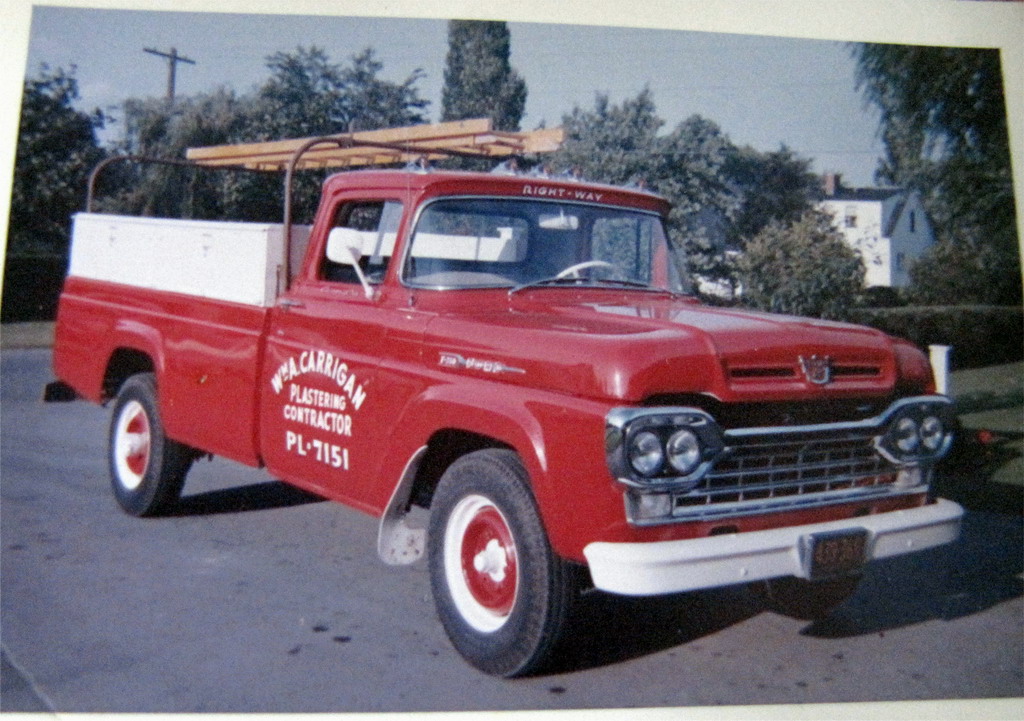
Buffalo’s housing stock tells a story if you know where to look. Beneath layers of paint and wallpaper, many homes across Western New York still contain traditional plaster systems that date back more than a century. Understanding how those plaster systems were built, and why, helps explain why certain repairs succeed while others fail.
WNY experienced massive growth between the late 1800s and the mid 1900s. Neighborhoods in Amherst, Buffalo, Cheektowaga, and surrounding towns filled with homes built during a period when plaster was the standard wall and ceiling finish. Drywall did not become common in residential construction until the 1960s, so most homes built before then relied on traditional plaster systems. Either rock-lath (which looks like drywall from the backside) or wood-lath.
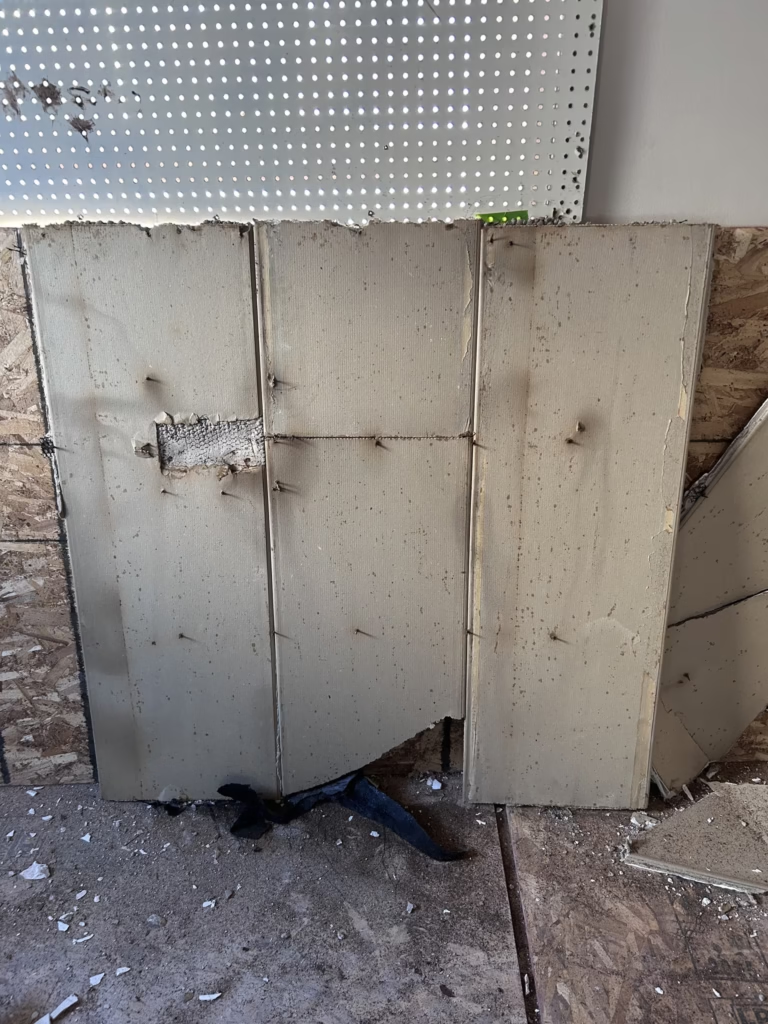
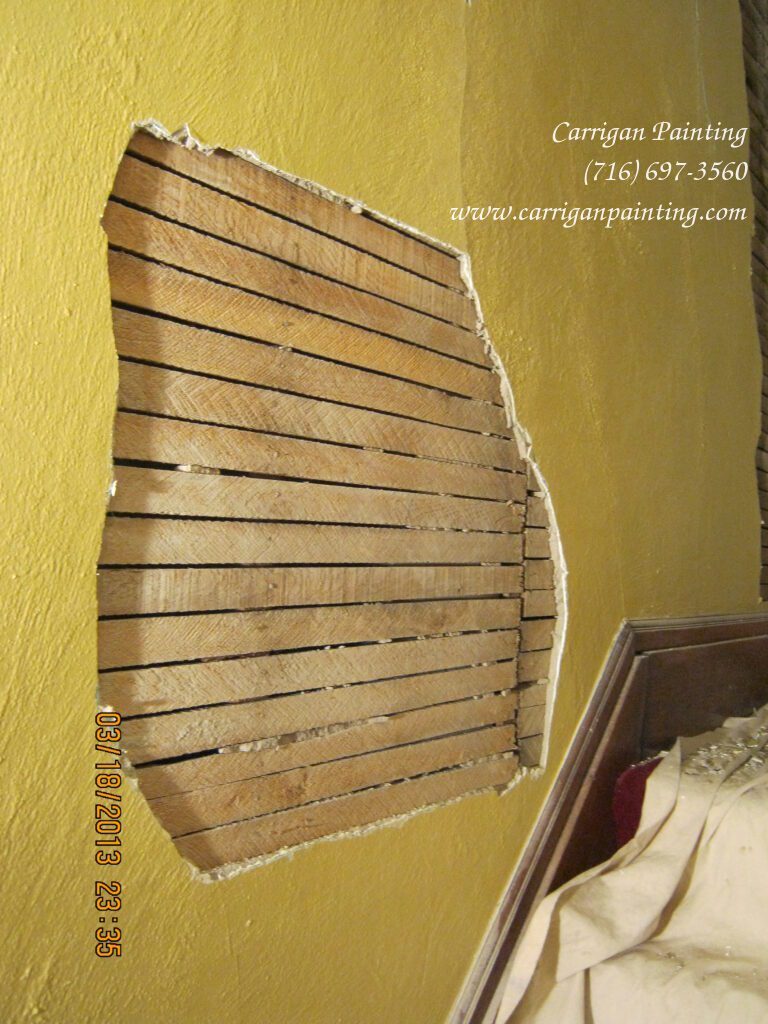
Those systems are not all the same. In fact, Western New York developed a somewhat unique combination of materials that reflected both traditional craftsmanship and emerging industrial innovation.
Traditional Three-Coat Plaster
Early plaster walls were typically built using what is called a three-coat plaster system. The layers worked together to create a durable finished surface.
The structure usually looked like this:
Wood lath > Scratch coat > Brown coat > Finish coat
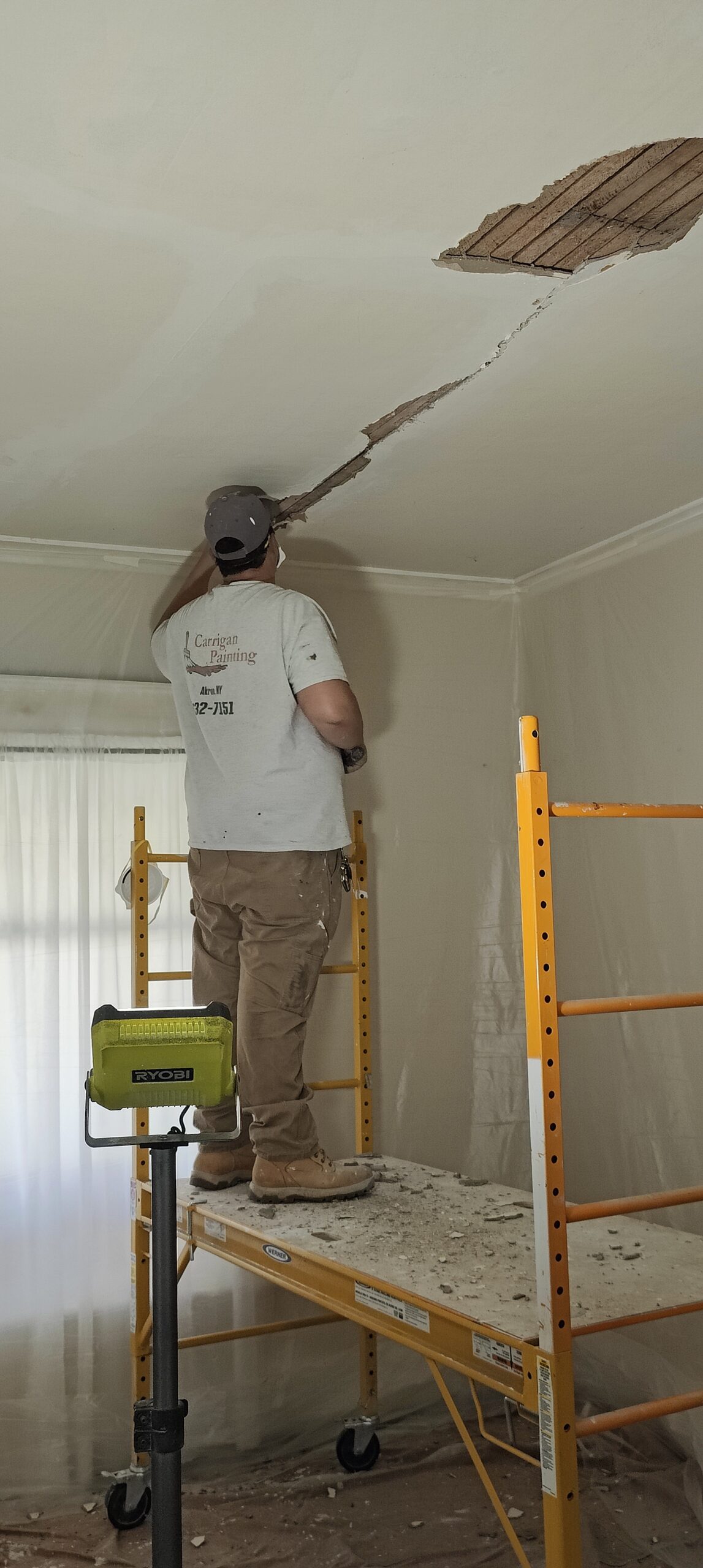
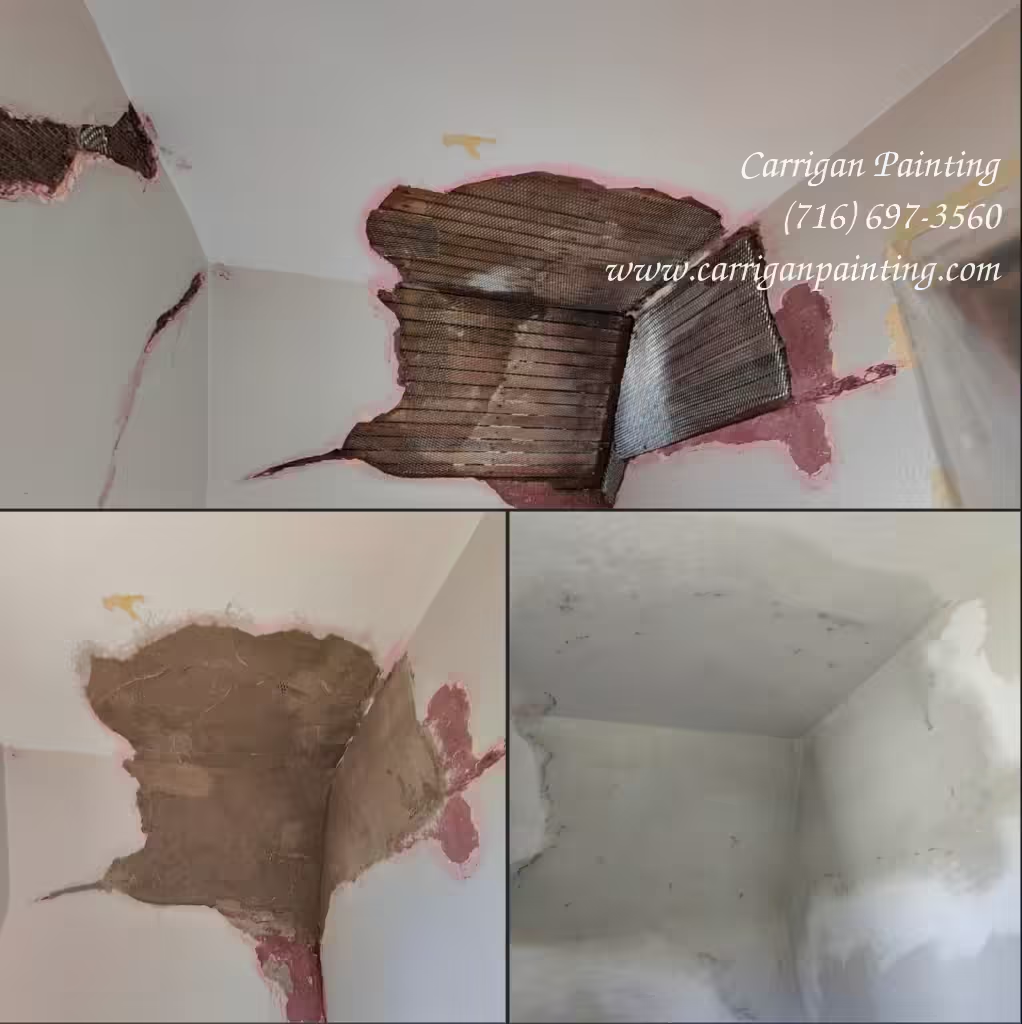
Wood lath consists of thin strips of rough-cut wood nailed across the framing, provided the structure or lattice for the plaster. When the first coat was applied, plaster is pushed through the gaps in the lath and harden behind it, forming “keys” that mechanically holds the plaster walls and ceilings in place.
The first coat, called the scratch coat, created the initial bond to the lath. After that came the brown coat, which leveled the wall and added strength.
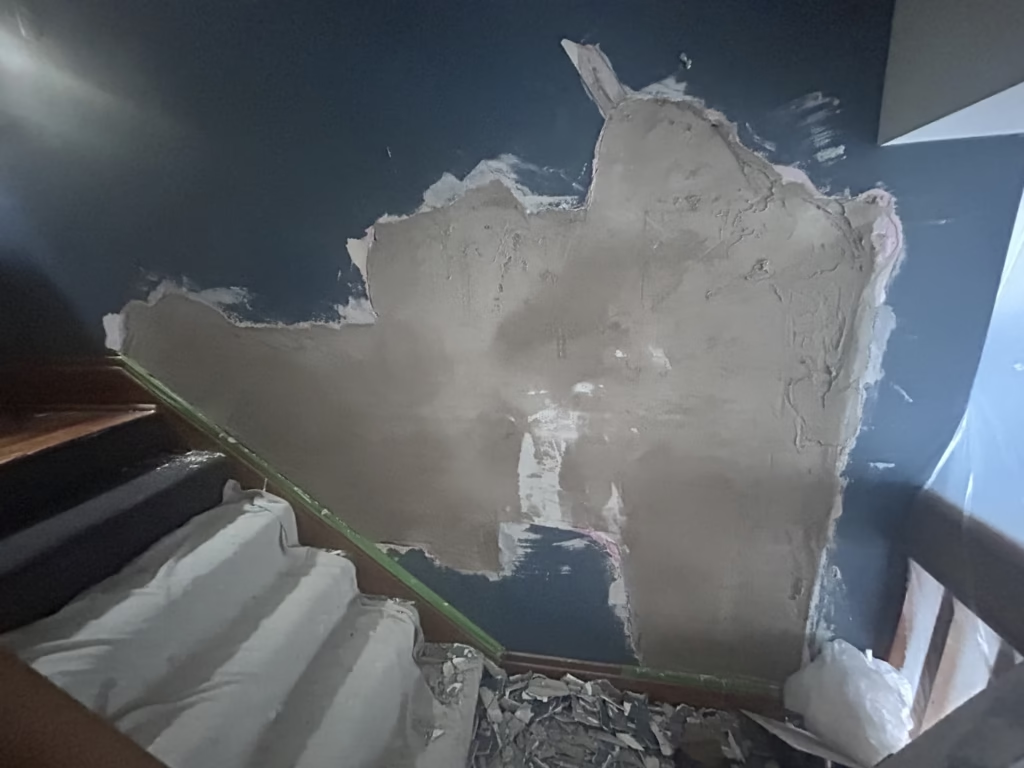
The final layer, the finish coat, produced the smooth durable surface that homeowners see today. It is as smooth as glass under the paint, and as hard as concrete. Making plaster nearly kid proof.
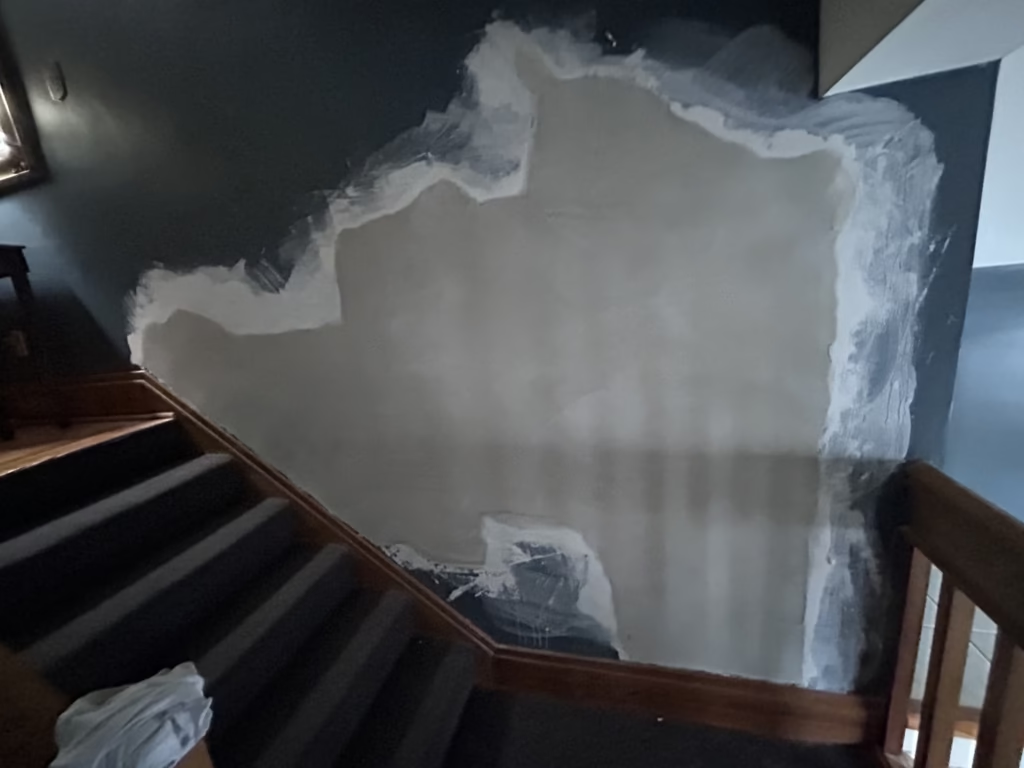
Lime Plaster: The Original Finish Material
For centuries, plaster finishes were made from lime putty. Lime plaster has a long working time and can be troweled to a very smooth, glass like finish. It also remains slightly flexible after curing, which helps it tolerate the seasonal movement common in wood-framed houses.
Lime plaster hardens in an unusual way. Instead of setting chemically like cement, it slowly absorbs carbon dioxide from the air and converts back into limestone. This process, called carbonation, can take days or even weeks.
Because of this slow curing process, traditional lime plastering is labor-intensive and requires skilled tradesmen.
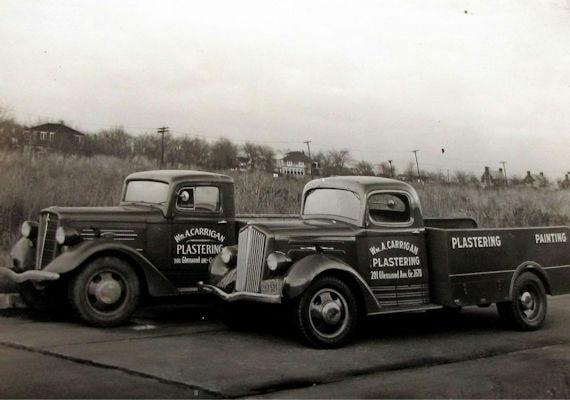
Buffalo, NY
Circa 1930
The Rise of Gypsum Plaster
During the late 1800s and mid 1900s, the building industry began introducing gypsum based plasters. Gypsum plaster offered a major advantage: it set a lot faster.
Many attached garages in Snyder, parts of Cheektowaga, and Williamsville are finished
 using gypsum plaster. Unpainted it looks grey, and often has a unique texture to it.
Some areas like Smallwood, in Snyder,  the walls and ceilings were given a swirl texture.
You can not duplicate that gypsum texture, using drywall compound.
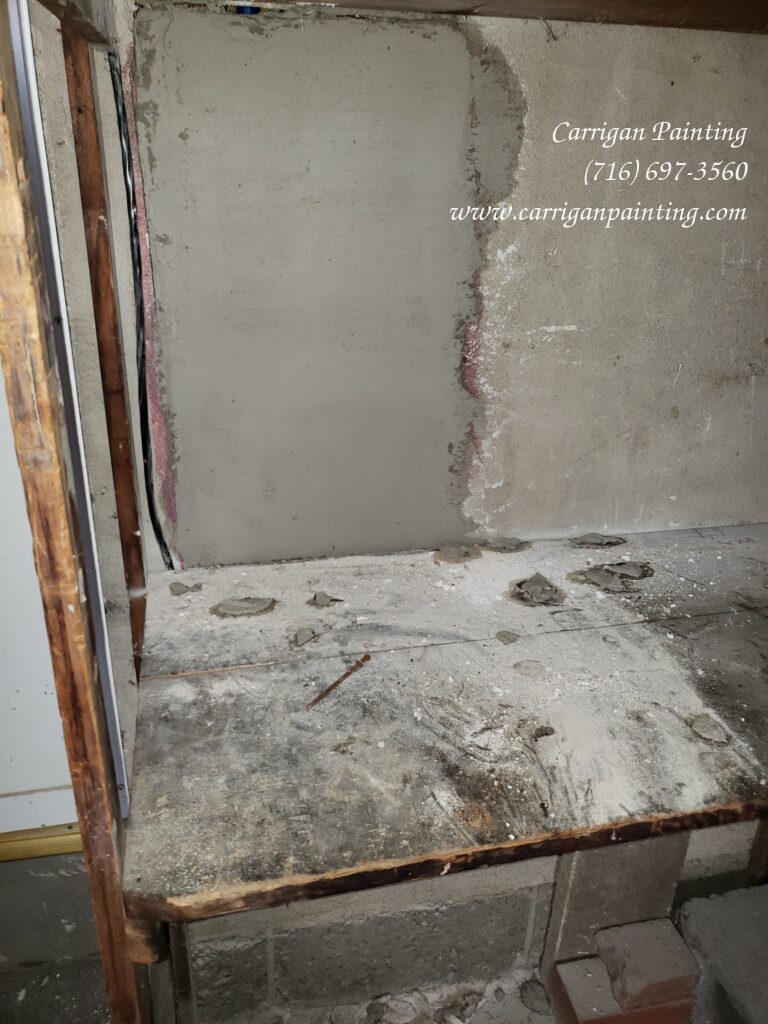
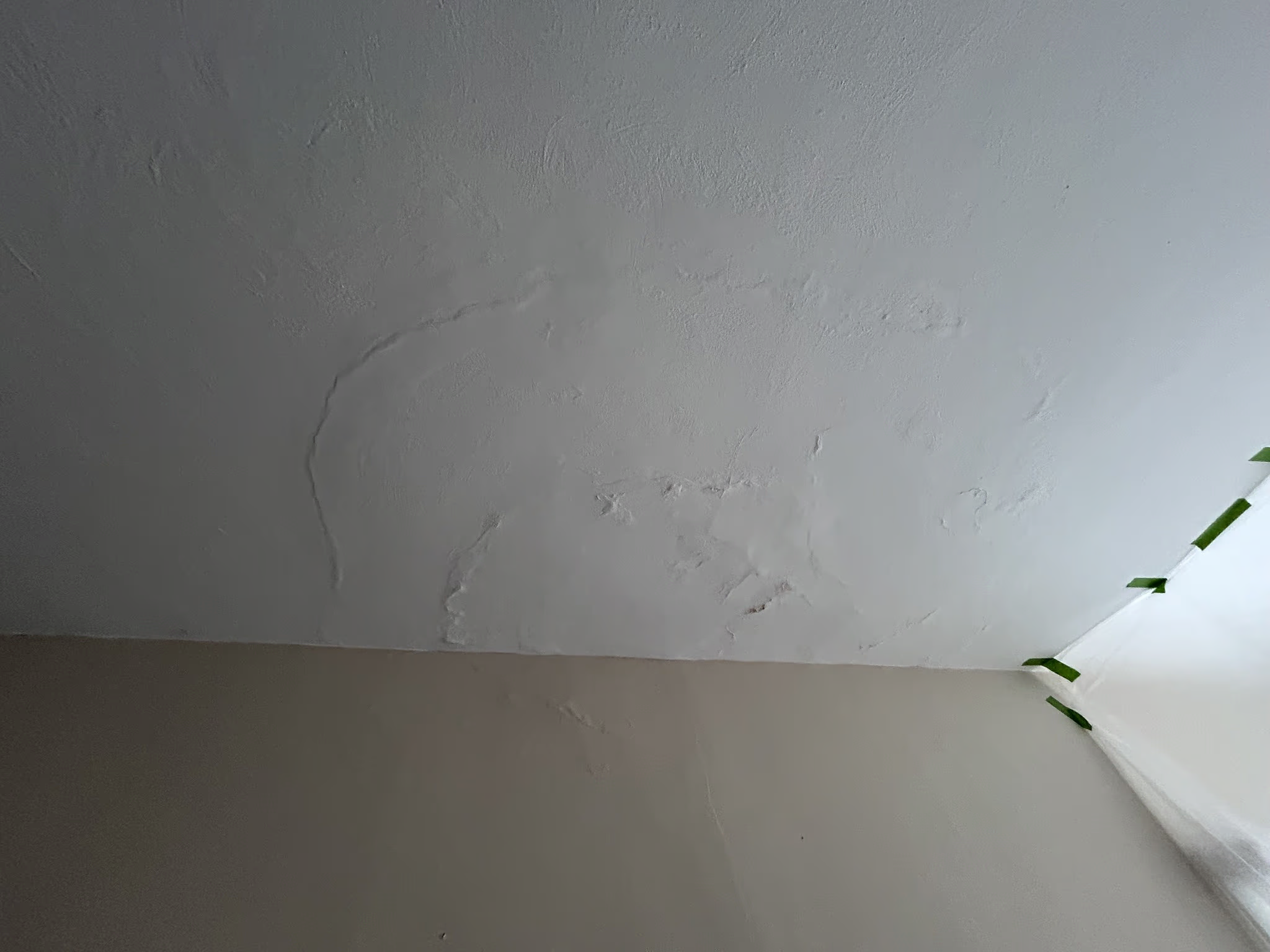
Gypsum plaster patch
Instead of waiting days for base coat to harden, gypsum plaster sets in hours – usually. That allowed plasterers to complete jobs much faster, which was important as the Buffalo housing stock grew rapidly during its industrial boom.
Western New York also sits near major gypsum deposits, and the growth of companies such as U.S. Gypsum helped accelerate the adoption of gypsum-based materials. Most plaster and drywall materials in use today in Buffalo NY, are made by USG.
The Hybrid System Common in WNY Homes
By the early twentieth century, many plasterers in Western New York adopted a hybrid system that combined both lime and gypsum based plasters.
Most plaster houses in WNY, the plaster structure looks like this:
Pre-1940:
Wood lath > Gypsum basecoat (scratch and brown coats) > Lime plaster > Paint
Post-1940:
Rock lath > Gypsum basecoat > Lime plaster > Paint
In other words, the structural coats were gypsum-based, while the thin finish layer remained lime.
This combination offered the best qualities of both materials. Gypsum allowed the walls to be built efficiently, while lime created a smooth, workable finish surface.
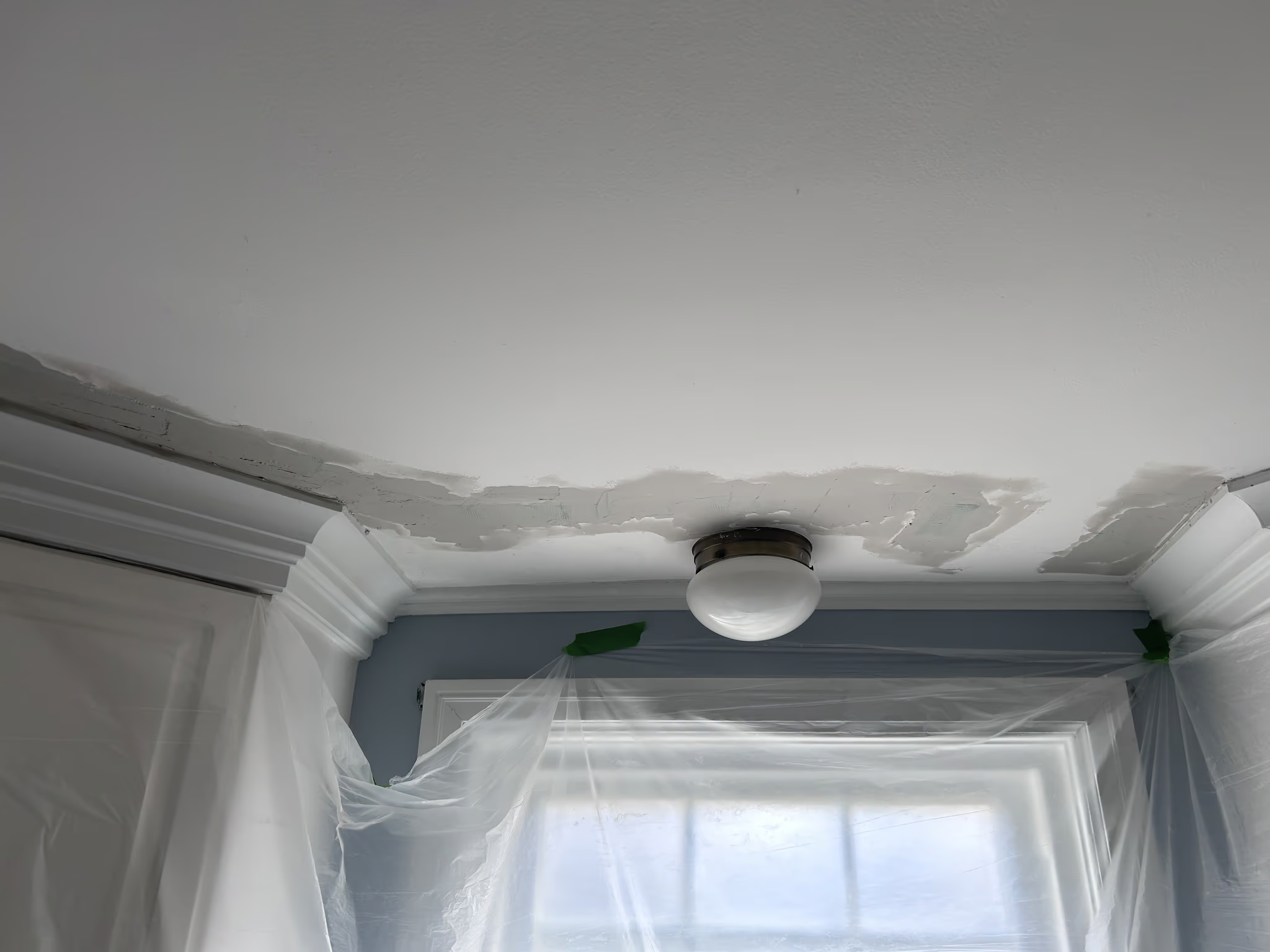
The finish coat is usually very thin, often around 1/16 to 1/8″ which is why many people assume it is gypsum when it is actually lime. The white layer, the top layer is a lime based plaster, the grey layer is a gypsum based plaster.
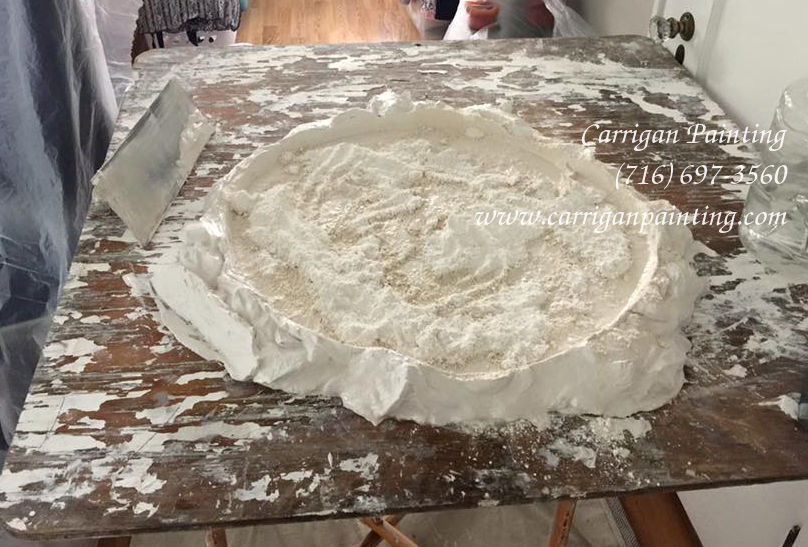
Why Lime Finish Plasters Stayed Popular
Even after gypsum products became widely available, many plasterers continued using lime for finish coats.
Lime offered several key advantages:
- It had a longer working time, making it easier to trowel.
- It could be burnished to a dense, polished surface – the finish found in most WNY plaster houses.
- It remained slightly flexible-on the microscopic level, which helped reduce cracking and other issues.
Those characteristics made lime finish plaster particularly well suited for the seasonal temperature and humidity changes common in Western New York.
Plaster vs. Drywall
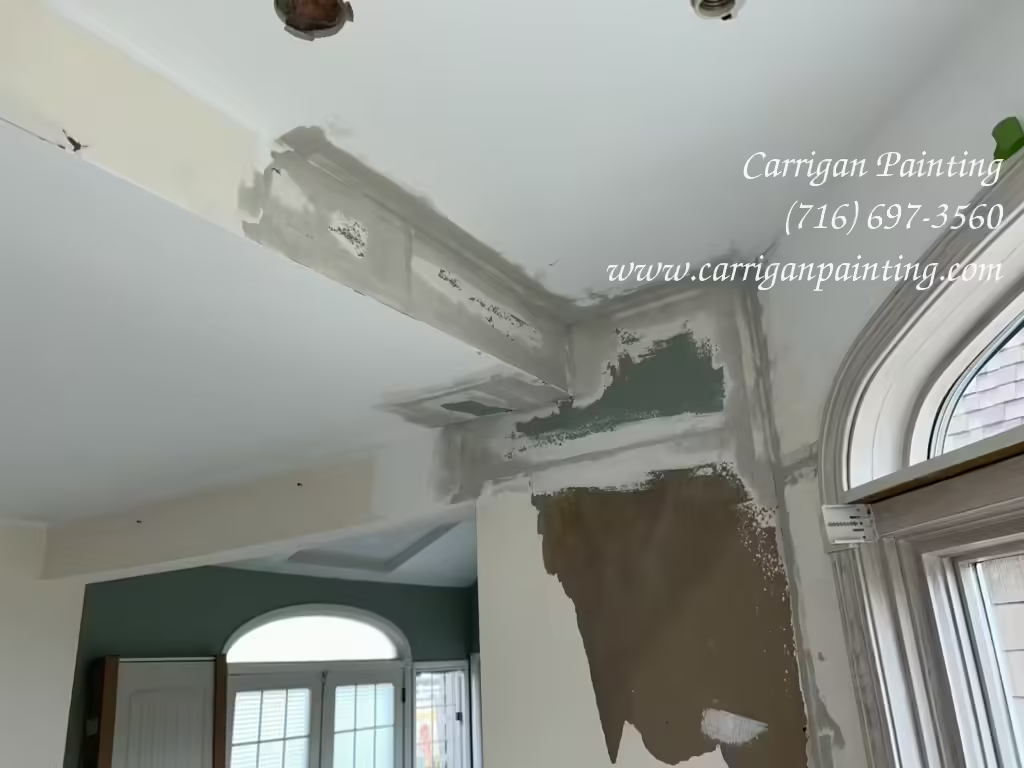
By the 1950s, drywall began replacing plaster in residential construction. However WNY didn’t make the transition until the mid 1960’s. Drywall could be installed faster and required far less specialized labor. As plastering trades declined, drywall became the standard wall system used today.
Drywall is a gypsum based product and is much easier to work with over traditional plaster. Today compounds, “mud”, contains a lot of glues, adhesives, and other filler materials to make it easy to work with, easy to sand and finish, and light weight.
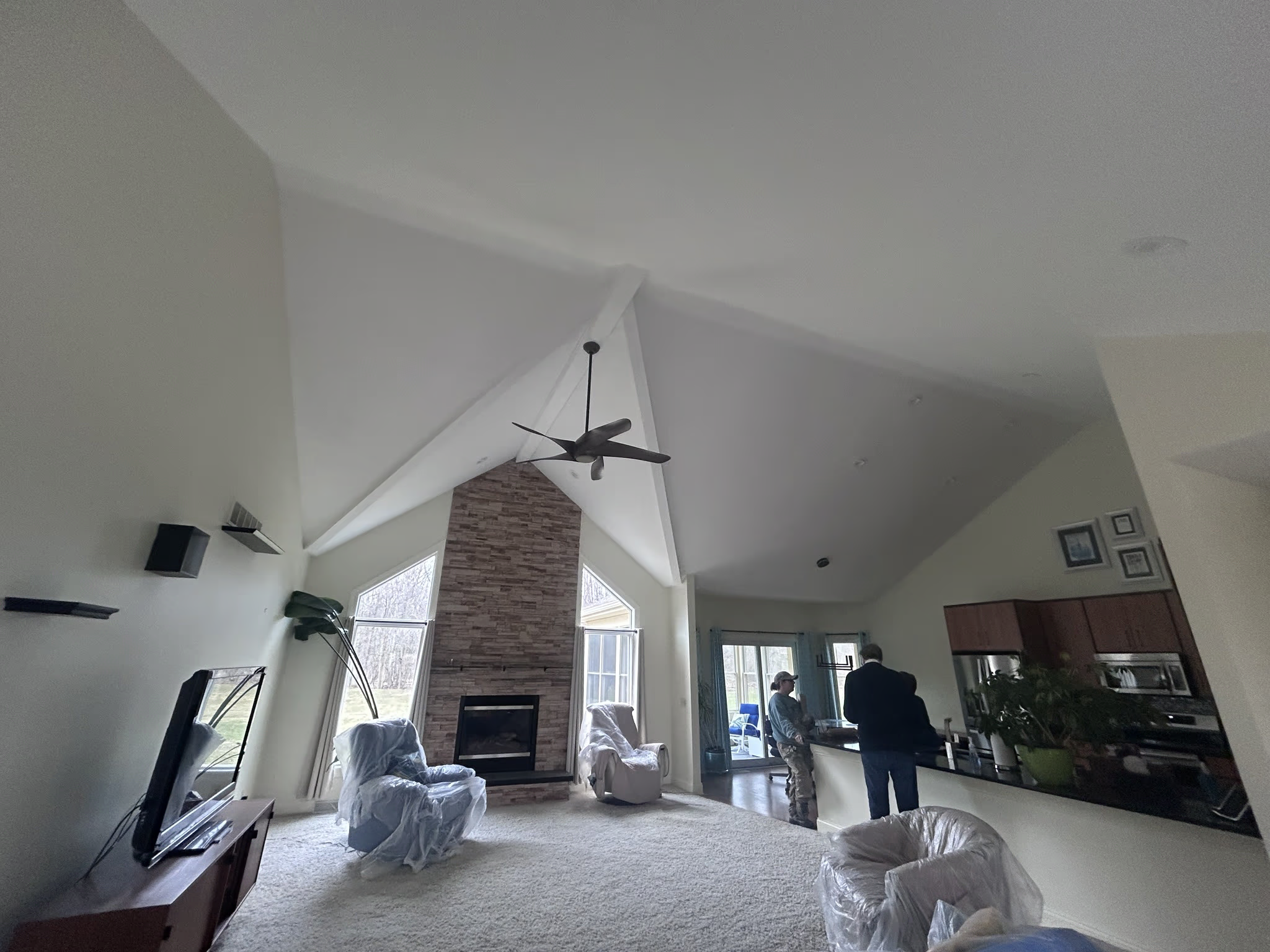
Drywall repair after water damage from a roof leak
However, tens of thousands of homes throughout Western New York were built before drywall became common. As a result, many homeowners in Western New York still live with and often must repair original plaster walls and ceilings that are decades, or even more than a century, old.
Why Understanding Plaster Matters Today
The difference between lime finish plaster and gypsum plaster is not just historical trivia. It affects how plaster should be repaired.
Many modern patching materials are gypsum-based. While they can work well in many situations, they do not behave the same way as traditional lime finishes. Differences in hardness, flexibility, finish and moisture absorption can lead to visible repair lines or cracking if the materials are not matched correctly.
Put simply: Drywall mud has a texture, plaster does not (in this context).
Understanding the original plaster system helps determine the best approach for every repair..
The combination of gypsum basecoats with lime plaster became a defining feature of many homes across Western New York. More than a century later, those same plaster systems continue to shape how walls and ceilings are repaired and restored throughout the region.
Related Posts:
1. The Danger of a Plaster Bulge: Plaster bulges can be very deceiving and can open up massive sized holes. What started out as a large size plaster bulge 2 feet wide by 4 feet long, turned into a hole 7 feet wide by 8 feet long.
2. The Difference Between Plaster and Drywall Repair: Almost anyone can learn to repair drywall. Almost anyone can make repairs to walls and ceilings using pre-mixed drywall compound which comes in a ready-to-use bucket.