If you’re seeing your ceiling blister, flake, or peel, and there’s no sign of a leak, you’re not alone. Some homeowners in Amherst, and Lancaster are facing this issue—and it’s both confusing and frustrating. We’re seeing a specific ceiling failure tied to a hidden problem: previously painted popcorn ceilings that were removed. Here’s what’s really going on, what to avoid, and how to fix it.
As time goes on, painted popcorn ceiling removal problems are becoming more common in Western New York. In some older homes throughout the region, popcorn ceilings that were once painted, then had their popcorn texture removed, are, in a limited number of cases, now beginning to fail. These issues look like water damage, paint peeling, blistering, flaking, but often there’s no leak at all. Currently however, once this problem arises, the options aren’t quick or cheap.
In the past year or so, I have looked at a few jobs in East Amherst and Lancaster, with this issue.
What to Expect If You’re Facing This Issue
- Ceiling has an alligator skin look to it
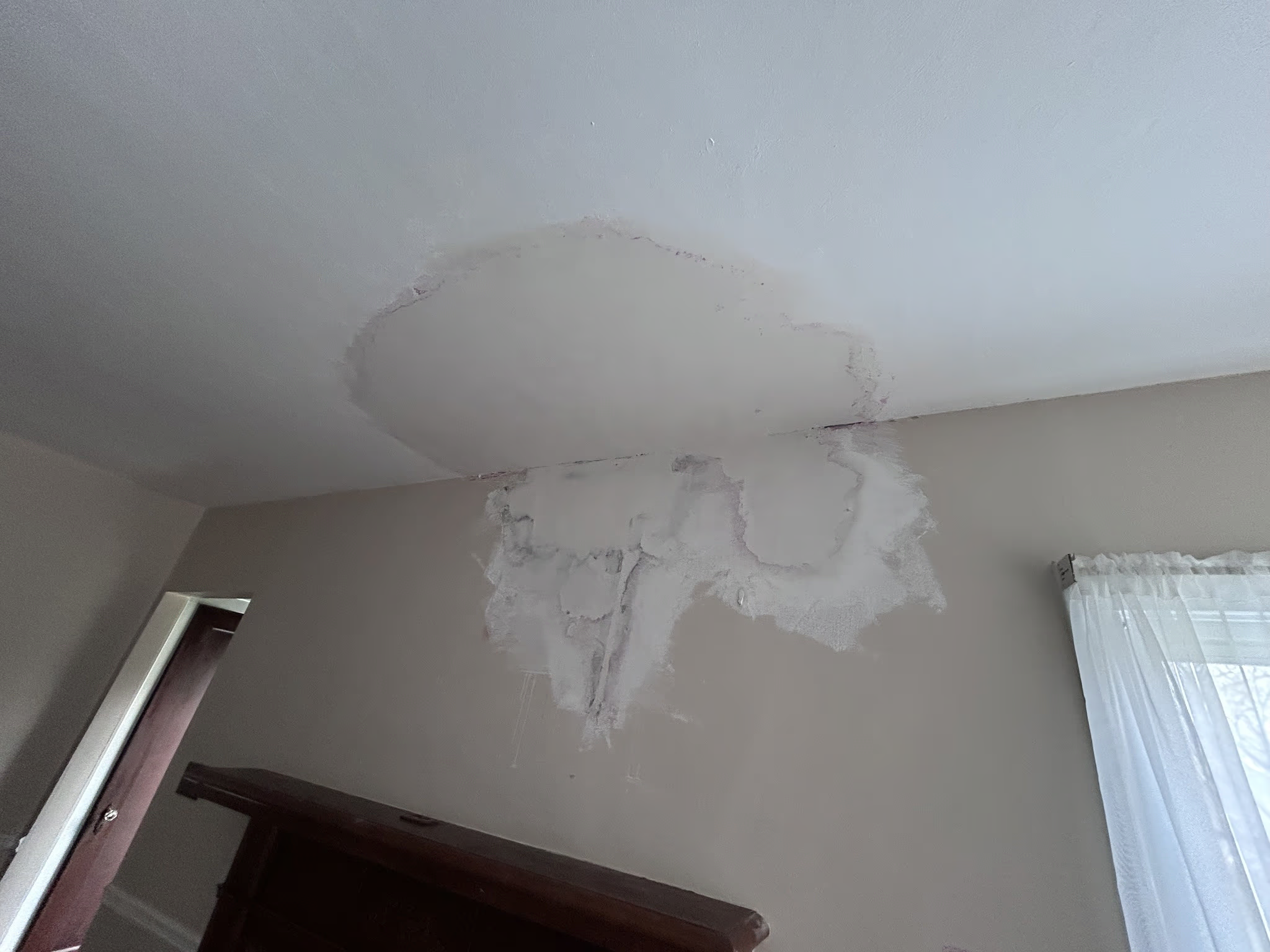
- The ceiling may look like water damage but isn’t – flaking and peeling
- Standard approaches often fail long-term
- There may be no quick fix, but there are permanent solutions
- We’ll walk you through options that fit your budget and timeline
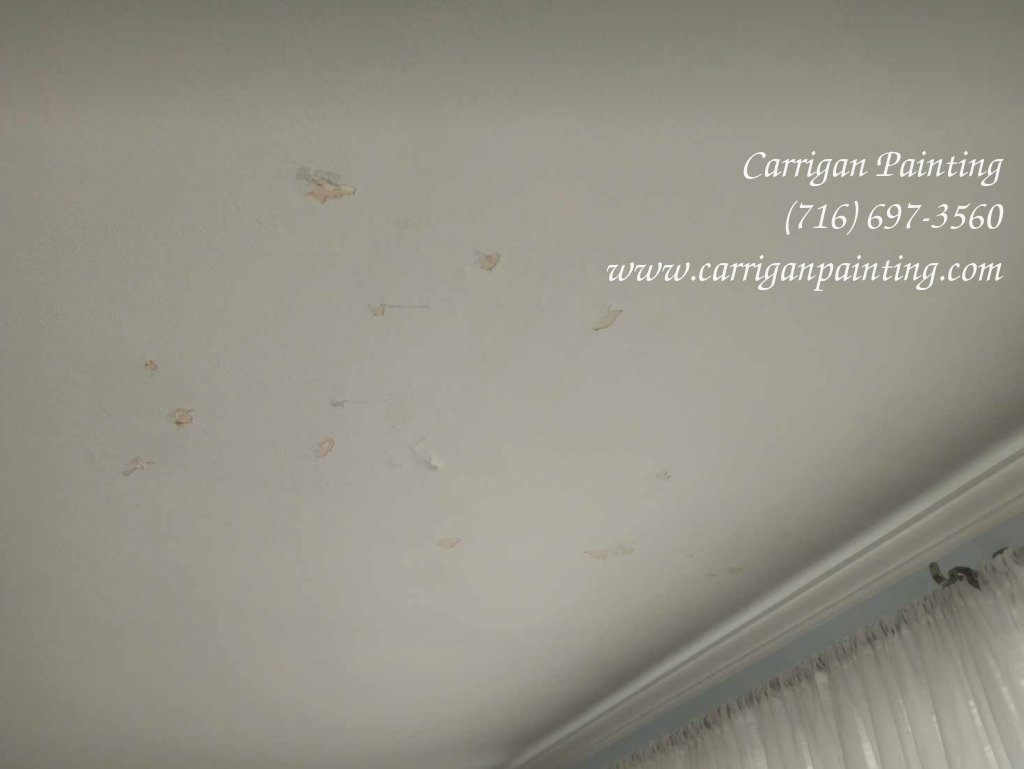
When It Looks Like Water Damage – But Isn’t
I am beginning to get more and more calls for a situation where the ceiling paint is pealing like its been impacted by water, there are no stains, no indication of water. It looks like water damage but its not. So what is going on? Well in this situation, we are discovering that the ceiling previously had popcorn, and that the popcorn texture was painted prior to removal. This is an important detail as it changes how we approach these new problem ceilings.
Q: Can you scrape a popcorn ceiling that has been painted?
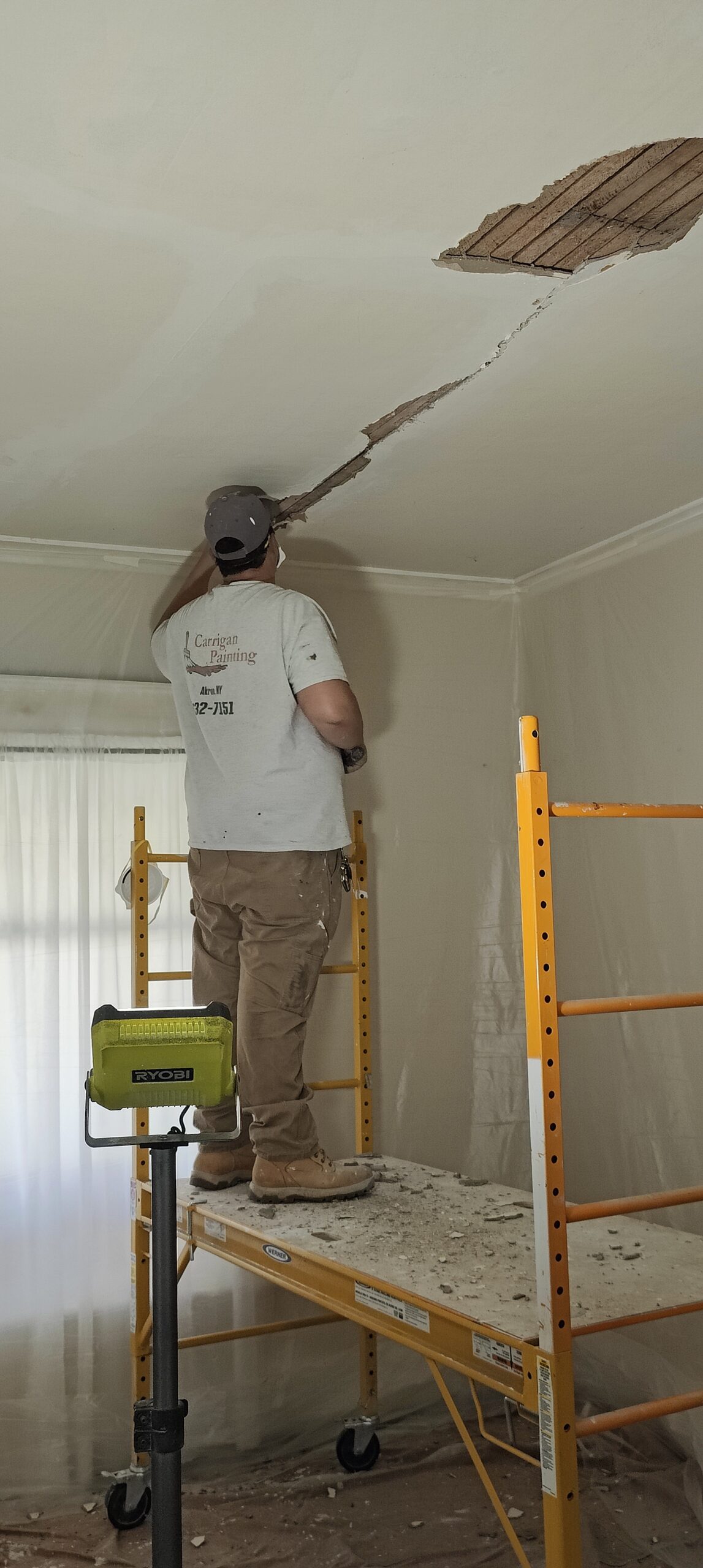
A: Yes, but when you remove the texture from a painted popcorn ceiling, its almost impossible to remove the base-layer of popcorn texture, because its sealed into the ceiling with paint. Even wetting and scraping, will not remove it. In such cases, your merely removing the Styrofoam texture and associated materials, but are leaving behind the base layer of texture. A 1/8″ layer of material, that is nearly impossible to remove with out destroying the ceiling.
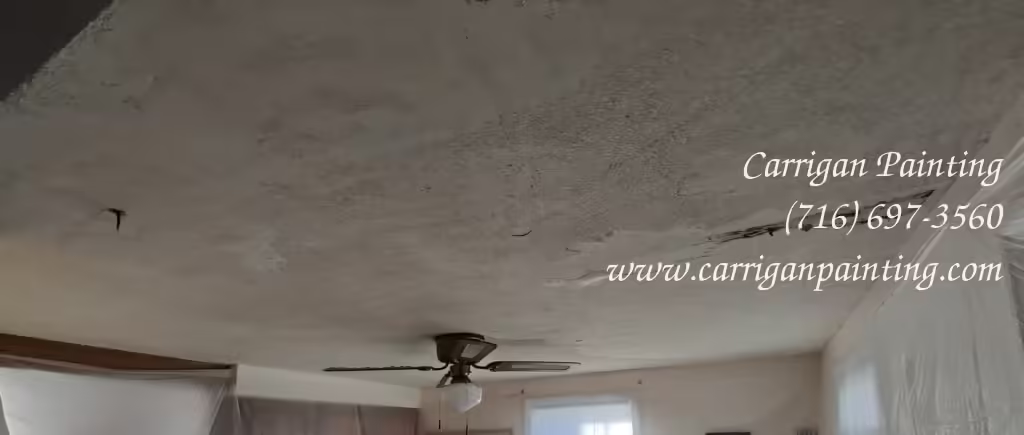
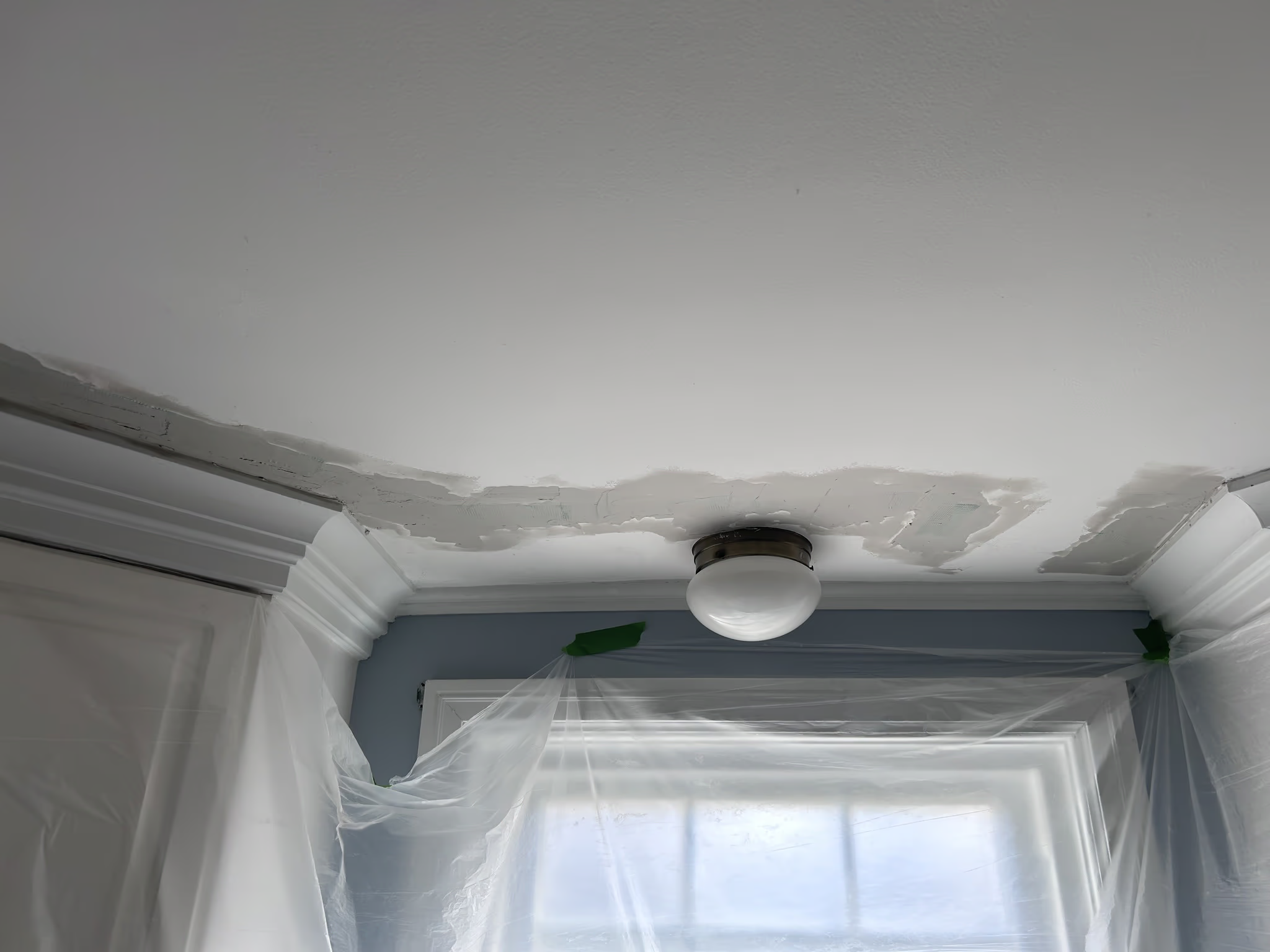
This popcorn ceiling in Lancaster NY was previously painted prior to removal
Our next step would be to prime this layer with an oil based primer, such as Sherwin Williams Problock HS, to help ensure it doesn’t come off. Then we skim coat the ceiling, prime a second time to lock in the skim coat, then two coats of ceiling paint. Pretty standard stuff.
Skim coating is a process where we apply a thin, smooth layer of material over your entire ceiling, kind of like icing a cake, to hide imperfections, this process is often referred to as a level 5 finish.
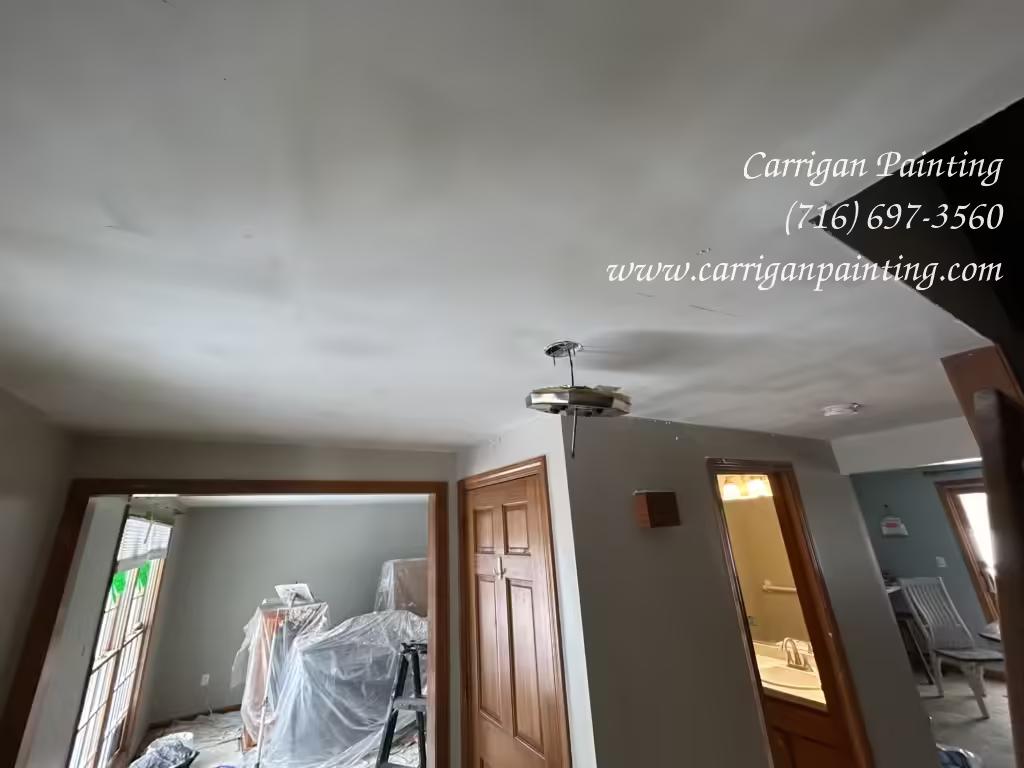
Why Skim Coating a Painted Popcorn Ceiling Sometimes Fails
Q: Can you skim coat directly over a painted popcorn ceiling?
A: You can, but you shouldn’t. The moisture in the wet drywall compound can and will loosen the popcorn texture leading to failure of the texture and skim coat. Its best to remove as much of the popcorn texture as you can first, then prime to seal the left over texture on the ceiling, and then skim coat.
Q: Why does skim coating sometimes fail on painted popcorn ceilings?
A: Because the new material relies on the old painted base layer for adhesion. Once that first layer loses its bond with the ceiling substrate, both the old and new material peel. Extra coats and mud add weight and moisture, which can make the failure worse over time.
Now jump ahead 10-15 years and the base layer begins to lose its adhesion to the ceiling substrate and begins to blister the ceiling paint and peal off in spots. Often looks like a bathroom ceiling with poor ventilation. Sometimes in small areas, some times the entire ceiling will start to look like this. The problem we as tradesmen are seeing is that once this starts, adding more drywall mud and skimming it, may only be an expensive temporary fix.
The new material, is relying on the existing material, to not peal off. If the old material continues to delaminate, the new material will peal as well. The more mud you add, the worse it may get. Between the additional moisture from the materials (mud, paint) to the weight of that material, becomes a compounding factor.
We are exploring unconventional ideas to resolve this issue with out incurring the cost and disruption of installing a new drywall ceiling. However not enough time has passed to gauge as to whether this method works or not. So far so good, but time will tell.
There is currently a solution, but its not cheap
Hang new drywall over the existing, and start over. And not 3/8″ drywall either or you will be dealing with new problems. Has to be minimum 1/2″ or over time, the drywall will sag between the ceiling joists, giving a pillowed effect sometimes seen on older plaster ceilings – which will be impossible to get rid off!
This method, will impact the top 10″ of the walls all the way around the room, so you’ll be repainting the walls as well. The top corners have to be taped and mudded. Figure about ten inches of the top of the walls will be impacted. This is the only way that we know of, to stop the peal. Because what ever you put over it, will be relying on the adhesion of what ever is under it. We are attempting some ideas to glue the texture base layer to the ceiling, however have no long term results as of yet.
There is good news though, in New York State a new ceiling is considered a capital improvement and is therefore sales tax free. You can find the link to the capital improvement on our FAQ Page
New Ceilings sometimes mean New Problems
When it comes to installing drywall, whether over existing walls and ceilings or in new construction, drywall panels generally will conform to what its being attached too. Meaning that if your ceiling isn’t flat to start with due to sagging ceiling joists, or other issues, installing a new drywall ceiling over it, may exacerbate these defects. There are limited avenues to fix these blemishes with out creating a bigger problem.
Over the years, people have used popcorn texture as an affordable option to help hide ceiling defects. While new drywall can dramatically improve the ceiling, it’s important to know that it won’t correct structural sagging that may have been hidden by popcorn texture. We’ll inspect the ceiling and help you understand if it’s a concern.
While we can often mitigate bumps and valleys created by ceiling framing, these issues often become much more pronounced once the ceiling texture is removed. and the ceiling is smooth and flat.
Worried About Your Ceiling?
We have been helping homeowners in Western New York fix ceiling problems for years. If you’re unsure what’s going on with your ceilings, we can take a look and walk you through your options, no pressure.
Feel free to call or text us to set up a quick in-person consultation. Or fill out the form below, and we will reach out to you with in the next few hours.